



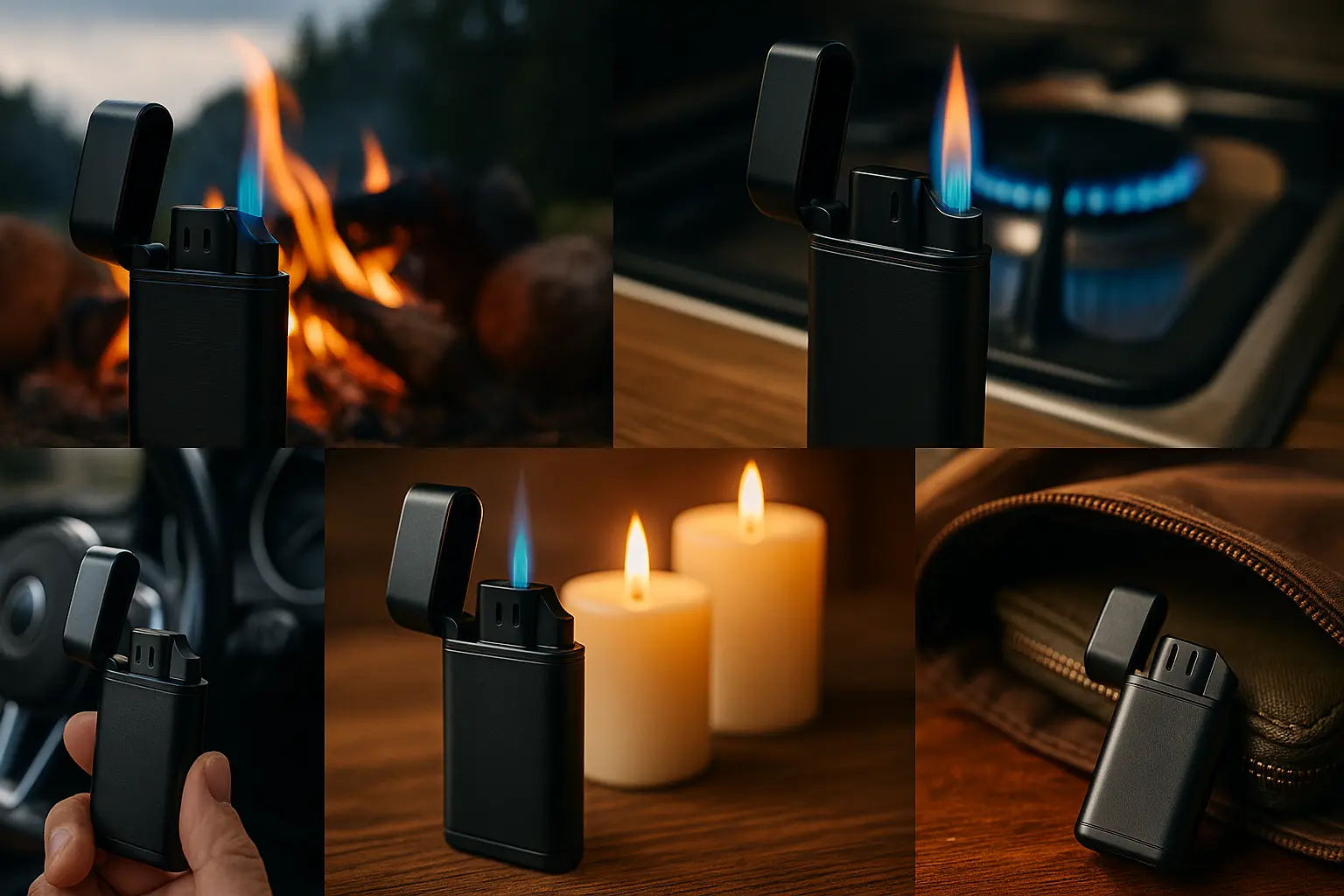
When the wind is blowing and you need to start a fire
Lighting a fire on a windy day can quickly turn a relaxing experience into a frustrating struggle. A standard lighter with a soft flame may go out with every gust of wind. That’s why people who enjoy camping or outdoor activities often choose jet flame lighters. Their focused, high-temperature flame resists wind and can ignite even slightly damp materials.
Field tests published by outdoor gear experts show that jet flame lighters remain functional in winds exceeding 20 km/h, making them a reliable choice in unpredictable conditions.
Jet flame lighters are especially effective for:
- lighting a campfire in the forest
- starting a grill during a windy picnic
- cooking meals outdoors
When you need a flame—even if you don’t smoke
Even for non-smokers, a lighter is often a handy tool. It can be used to seal the end of a synthetic rope, heat a metal pin, or light candles and incense. In many households, a lighter is treated as a practical everyday item.
According to consumer safety studies in the U.S. and Europe, over 30% of lighter usage is unrelated to smoking—demonstrating how often people need a reliable source of flame in daily life.
Practical home uses include:
- lighting scented candles
- singeing rope ends
- heating small tool components
On the road—in a car, camper, or tent
Every travel or emergency kit should include a dependable lighter. It can be useful in a car, while camping, or during hikes. However, not all lighters are equally suited for such environments. Petrol lighters, for example, should not be stored in overheated vehicles, as the fuel may leak or evaporate, leaving behind unpleasant odors.
Vehicle safety testing has shown that lighters left in a parked car during summer can reach internal temperatures of up to 60°C (140°F), which may affect their durability and safety.
Useful travel scenarios include:
- warming hands over a small flame
- lighting a portable grill
- sealing a loose paracord end
When there’s no power or gas
Power outages or a broken stove igniter can happen unexpectedly. In these moments, a lighter becomes more than just a backup—it’s essential. Whether it’s lighting a gas burner, candles, or a fireplace, having a lighter can solve several problems at once.
Utility reports from various countries show that the average household experiences at least one short power outage per year, making a manual ignition source a smart item to keep nearby.
A lighter is useful when:
- the stove’s electric igniter fails
- a fireplace flame goes out
- there’s no other light source after dark
Not every lighter works in every situation
Lighters vary not only in design but also in function. Choosing the right one depends on your specific needs—whether practical, aesthetic, or technical. Selecting the wrong type can lead to disappointment or even failure in critical situations.
| Lighter Type | Ideal Use | Pros | Cons |
|---|---|---|---|
| Gas | everyday use | affordable, lightweight | sensitive to wind and moisture |
| Petrol | retro style, gift | works in cold, stylish design | possible leakage, fuel odor |
| Jet flame | outdoor, camping | wind-resistant, strong flame | higher cost, more fuel usage |
Before putting a lighter into your backpack, glove box, or gift package, consider how and where it’ll most often be used. That way, it will always serve its purpose—right when you need it most.

