



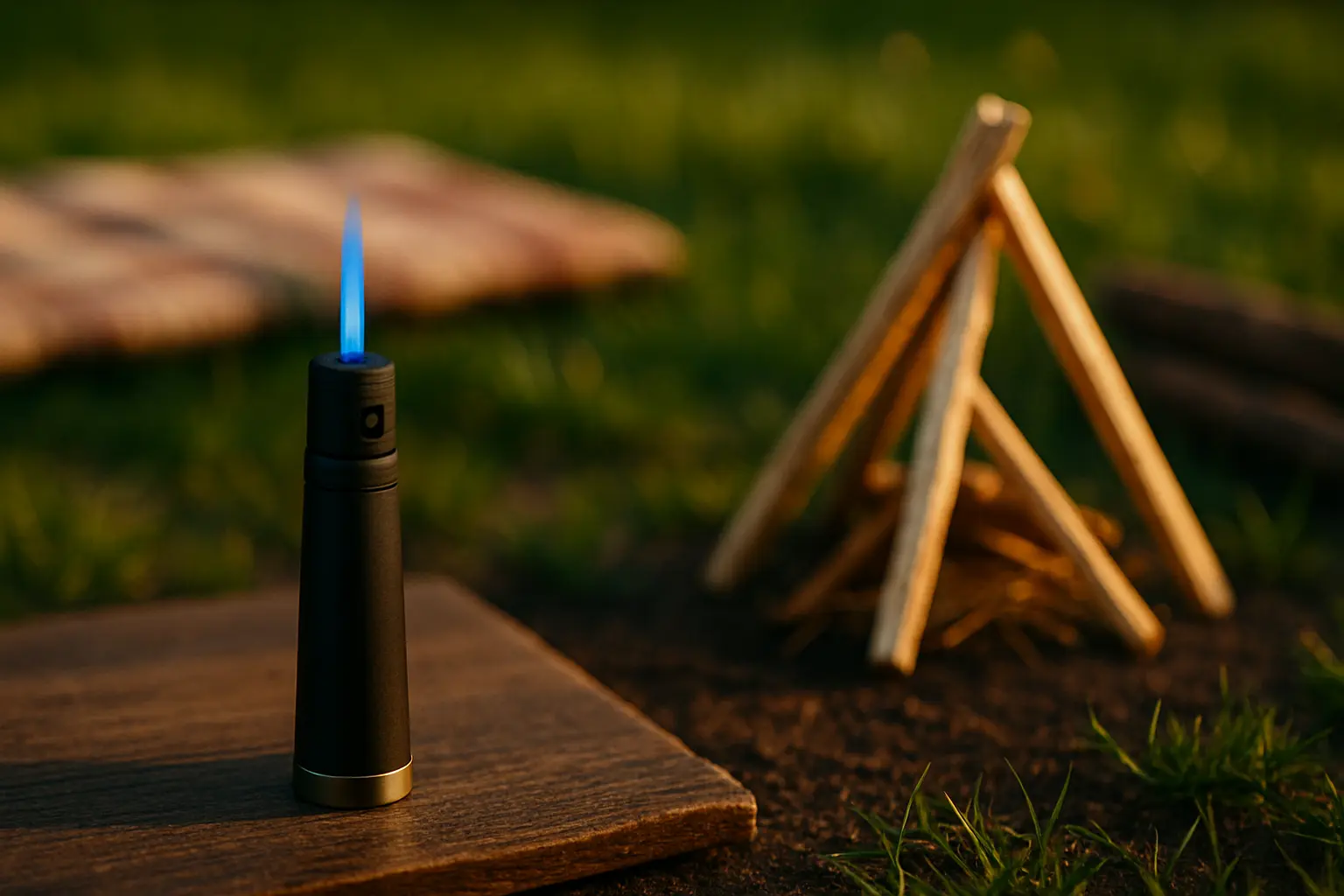
Starting a fire outdoors is not always as easy as it seems. Standard gas or petrol lighters often fail when faced with strong wind or high humidity. This happens because their flame is unstable and easily extinguished by gusts. Research by the National Fire Protection Association (NFPA) confirms that windproof lighters can maintain a stable flame at wind speeds up to 60 km/h, while regular models are extinguished at just 15–20 km/h. Additionally, tests by Survival Gear Review (2022) showed that turbo lighters are on average 40% more effective at lighting fires under difficult weather conditions than standard models.
When it comes to outdoor use, the following features matter most:
- Stable wind-resistant flame,
- Ease of use even while wearing gloves,
- Adjustable flame intensity,
- Reliable and safe construction.
Key Features of a Good Fire-Starting Lighter
Not every lighter will perform well in outdoor conditions. A high-quality outdoor lighter should have several critical features that make fire starting quick and effective. One of the most important is a concentrated jet flame, which can reach temperatures of up to 1300°C. This allows you to ignite not only paper or tinder but also slightly damp wood.
In a study by the American Society for Testing and Materials (ASTM), it was shown that lighters with dual or triple jet flames are 35% more effective in igniting moist materials compared to single-flame lighters.
| Lighter Feature | Advantages | Disadvantages |
| Wind resistance | Stable flame even in strong winds | May increase fuel consumption |
| Adjustable flame control | Allows precise adjustment of flame size | Requires proper setting |
| Piezoelectric ignition | Reliable mechanism, no flint required | May be more expensive to manufacture |
| Multiple jet burners (jet flame) | Fast ignition, very high temperature | Faster gas usage |
However, even the best lighter will not help if the campfire setup is poor or if the wood is too wet to catch fire.
Who Will Benefit Most from a Windproof Lighter?
Although every smoker might appreciate a durable, wind-resistant lighter, these models are especially useful for people who spend a lot of time outdoors. Campers, hikers, anglers, and bushcraft enthusiasts often face conditions where traditional fire-starting methods simply fail. According to the Outdoor Equipment Market Report (2023), 68% of outdoor lighter users cited wind resistance as the key factor influencing their purchase decision.
A windproof lighter is particularly useful for:
- Hikers and trekking enthusiasts,
- Anglers and hunters,
- Survivalists and bushcrafters,
- Grill fans and backyard firepit users.
How to Prepare a Campfire for Easy Ignition?
Even the best lighter cannot replace proper fire setup and the use of quality tinder. Choosing the right place — sheltered from wind and with dry ground — is essential. Research by the Forest Products Laboratory (USA) showed that wood with a moisture content above 20% significantly reduces ignition success, making well-dried fuel the best option.
Key principles for preparing your campfire:
- Arrange wood in a tipi or pyramid structure,
- Use dry tinder (e.g., thin twigs, dry grass, waxed cotton wool),
- Ensure airflow by leaving space between materials,
- Protect your tinder from direct wind exposure.
A windproof lighter allows you to direct the flame accurately, even in harsh conditions, making the process of lighting your fire much easier and more reliable.

