



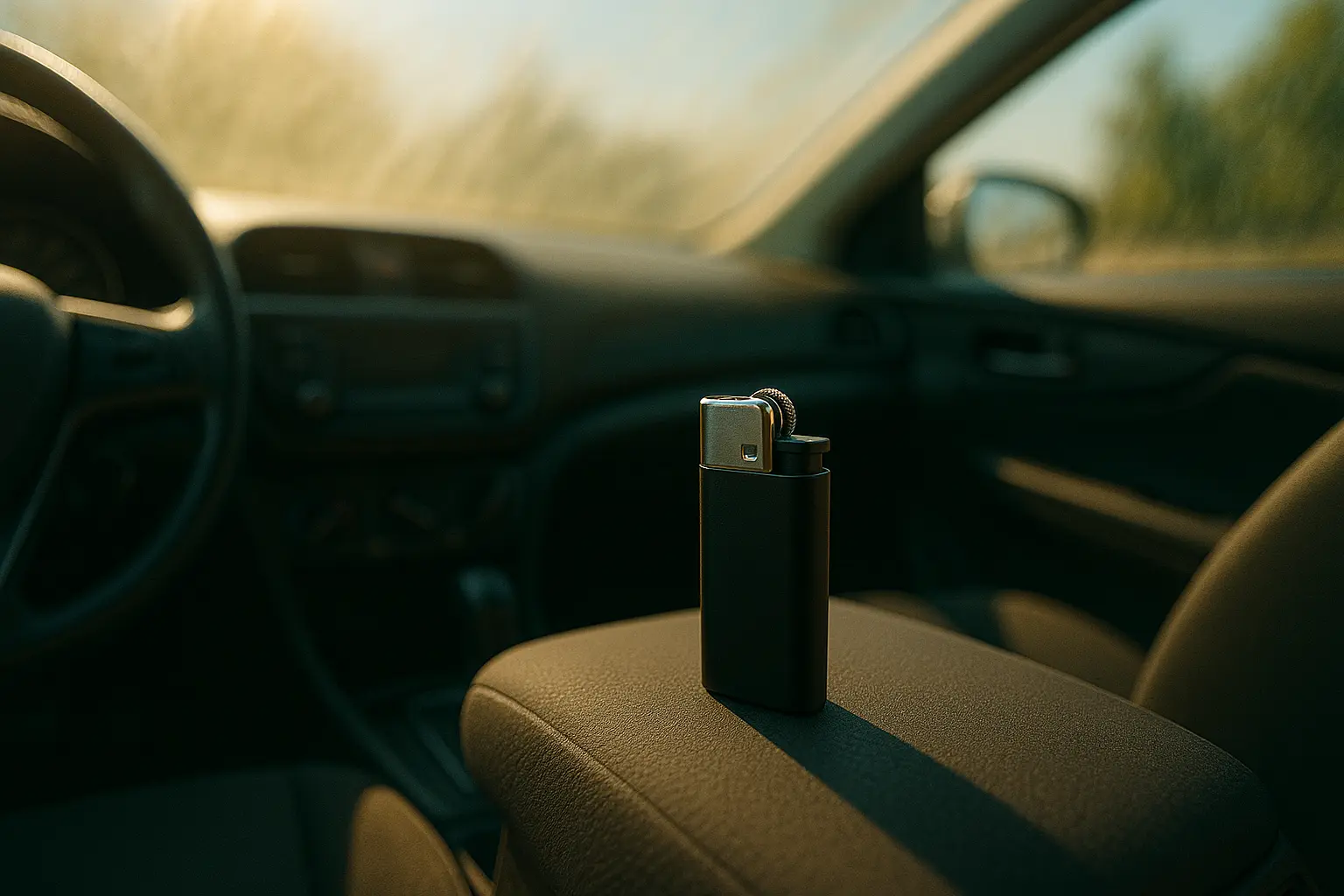
Lighters are everyday items, yet many myths and misconceptions surround them. Can they really explode in a car? Are fuel-based lighters toxic? Does a jet flame consume significantly more gas? In this article, we break down these common beliefs and check what experts and real-world tests have to say.
Can Lighters Explode in a Car?
This is one of the most widespread myths online. It’s true that most lighters contain flammable gas or fuel, but an explosion inside a car is extremely rare. Such incidents usually involve damaged or low-quality lighters exposed to direct sunlight for long periods.
According to tests conducted by the German TÜV institute, standard gas lighters begin to lose seal integrity above 70°C, but ignition occurs only at temperatures over 120°C. While the inside of a parked car can heat up to 60–65°C on a hot day, this doesn’t immediately pose a risk of explosion.
Conclusion: It’s best not to leave lighters on the dashboard or in direct sunlight, but the risk of explosion under normal conditions is minimal.
Are Fuel-Based Lighters Toxic?
Fuel lighters do release a distinctive odor, which some find unpleasant. Their fuel contains petroleum-derived compounds, but typical use involves very limited exposure. Users rarely touch the fuel directly, and any vapors dissipate quickly in open air.
A 2021 study published in Toxicology Letters showed that volatile organic compounds (VOCs) released during occasional use of fuel lighters were far below World Health Organization (WHO) safety thresholds. Prolonged inhalation may be harmful — but only in extreme and atypical cases.
Conclusion: For regular users, a fuel lighter is safe as long as it’s used correctly and not overfilled.
Does Jet Flame Use More Gas Than a Regular Flame?
Jet flames are hotter, stronger, and more focused, which gives the impression that they consume more fuel. Technically, they do burn gas faster per second than regular soft flames. However, since they light objects more efficiently, the actual usage time is often shorter.
In a 2023 test by Camping & Outdoor Review, a jet flame lighter with 1.4g of gas ran for about 10 minutes of continuous use, while a regular gas lighter with the same capacity lasted around 13 minutes. The difference is noticeable but balanced by the performance benefits.
Conclusion: Jet flame lighters use slightly more gas, but their wind resistance and ignition power justify the trade-off in outdoor conditions.
Facts vs. Rumors – What Experts and Tests Say
There are many more myths about lighters, often based on isolated events or exaggerated stories. Verified facts show that lighters:
- are safe when used correctly,
- differ in design and fuel consumption,
- require proper storage and handling.
| Myth | Reality | Source |
|---|---|---|
| A lighter can explode in a car | Extremely rare, only in extreme heat or faulty units | TÜV, 2022 |
| Fuel lighters are harmful to health | No evidence for harm from occasional use | Toxicology Letters, 2021 |
| Jet flame uses double the gas | Around 20–30% higher, but more efficient overall | Camping & Outdoor Review, 2023 |
Rather than relying on internet rumors, it’s better to look at the facts — and choose a lighter that fits your real needs without unnecessary concern.

